
Applications of Backward Curved and Forward Curved Centrifugal Fans Across Industries
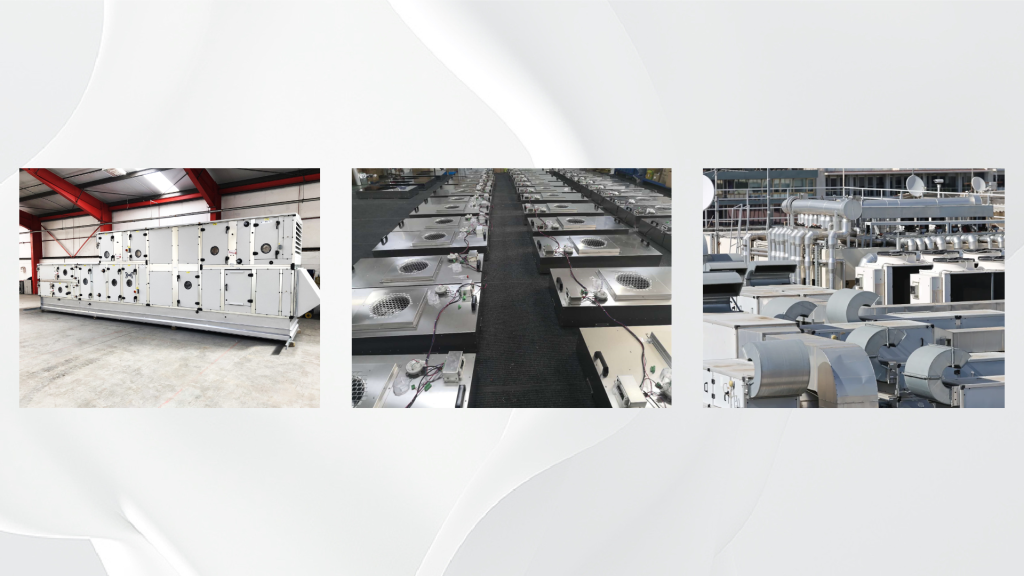
Centrifugal fans are widely used in ventilation, cooling, and air handling systems across various industries, thanks to their ability to generate high static pressure and control airflow efficiently. Among the most common types are backward curved centrifugal fans and forward curved centrifugal fans, each designed with distinct blade geometries that determine their performance characteristics, efficiency, and ideal application scenarios. While both serve the core purpose of air movement, their unique design differences make them suitable for different industrial needs—from high-efficiency, low-noise applications to compact, high-pressure requirements. This article explores the key applications of both backward curved and forward curved centrifugal fans across diverse industries.
Backward Curved Centrifugal Fans: High Efficiency, Low Noise for Industrial and Commercial Use
Backward curved centrifugal fans are distinguished by their curved blades that slope away from the direction of rotation. This design delivers exceptional energy efficiency, low noise levels, and high airflow performance at moderate to high static pressures, making them ideal for applications where long-term operational cost savings and quiet operation are priorities. Their robust construction also allows them to handle dusty, corrosive, or high-temperature air, making them versatile across industrial and commercial settings.
Key Application Industries for Backward Curved Centrifugal Fans
1. Industrial Ventilation and Dust Extraction
In manufacturing facilities, backward curved centrifugal fans are widely used for general ventilation and dust extraction systems. They effectively remove dust, fumes, and harmful pollutants from industrial processes such as metalworking, woodworking, and chemical manufacturing. For example, in woodworking shops, these fans extract sawdust and wood particles to maintain a clean working environment and prevent equipment damage. In chemical plants, they handle corrosive fumes and vapors, thanks to their corrosion-resistant blade materials, ensuring worker safety and regulatory compliance.
2. HVAC Systems for Commercial and Industrial Buildings
Backward curved centrifugal fans are the preferred choice for large-scale HVAC (Heating, Ventilation, and Air Conditioning) systems in commercial buildings, industrial workshops, and data centers. Their high efficiency reduces energy consumption, making them cost-effective for continuous operation. In data centers, they provide targeted cooling for server rooms, maintaining optimal temperatures to prevent equipment overheating. In shopping malls, office buildings, and hospitals, they circulate fresh air and regulate indoor temperatures, ensuring comfort and air quality for occupants.
3. Industrial Boilers and Power Plants
In power generation facilities and industrial boiler systems, backward curved centrifugal fans play a critical role in combustion air supply and flue gas exhaust. They deliver the high airflow and static pressure required to support efficient fuel combustion, ensuring optimal boiler performance and energy production. Their ability to handle high-temperature air makes them suitable for flue gas exhaust applications, where they expel hot, corrosive gases from boilers and incinerators.
4. Paint Booths and Coating Facilities
Paint booths and coating facilities require precise airflow control to remove overspray, fumes, and volatile organic compounds (VOCs). Backward curved centrifugal fans provide consistent airflow to maintain a clean, controlled environment, ensuring high-quality coating results and compliance with environmental regulations. Their low noise operation is also beneficial in these settings, reducing workplace noise pollution.
Forward Curved Centrifugal Fans: Compact Design for High-Pressure, Low-Flow Applications
Forward curved centrifugal fans feature blades that curve toward the direction of rotation, creating a compact design with a high pressure-to-size ratio. While they are generally less energy-efficient than backward curved models, they excel in applications requiring high static pressure at low to moderate airflow rates. Their compact footprint makes them ideal for installations where space is limited, such as in small equipment enclosures or residential HVAC systems.
Key Application Industries for Forward Curved Centrifugal Fans
1. Residential and Light Commercial HVAC
Forward curved centrifugal fans are commonly used in residential air conditioners, heat pumps, and small commercial HVAC units (such as those in small offices, retail stores, and apartments). Their compact size allows them to fit into tight spaces within these units, while their ability to generate high static pressure ensures efficient air distribution through ductwork. They are also cost-effective for small-scale applications, making them a popular choice for residential and light commercial use.
2. Small Industrial Equipment and Enclosures
In small industrial equipment, such as electrical enclosures, control panels, and laboratory instruments, forward curved centrifugal fans provide targeted cooling and ventilation. Their compact design fits easily into limited spaces, while their high static pressure overcomes the resistance of small ductwork or filter systems. For example, they cool sensitive electronic components in control panels, preventing overheating and ensuring equipment reliability.
3. Medical Equipment and Cleanrooms
Forward curved centrifugal fans are used in medical equipment such as ventilators, medical ovens, and cleanroom ventilation systems. Their ability to maintain precise airflow control and low noise levels makes them suitable for these sensitive environments. In cleanrooms (e.g., in pharmaceutical or semiconductor manufacturing), they help maintain sterile conditions by circulating filtered air and controlling particle levels.
4. Automotive and Marine Applications
In the automotive and marine industries, forward curved centrifugal fans are used for cabin ventilation, engine cooling, and HVAC systems in vehicles, boats, and ships. Their compact size fits into the limited space of vehicle engine bays or marine cabins, while their high static pressure ensures efficient air circulation. They also withstand harsh environmental conditions, such as vibration and temperature fluctuations, making them durable for mobile applications.
Conclusion
Backward curved and forward curved centrifugal fans are essential components in ventilation, cooling, and air handling systems, each tailored to meet specific industry needs. Backward curved fans excel in high-efficiency, low-noise applications such as industrial ventilation, large-scale HVAC, and power plants, where long-term cost savings and performance are critical. Forward curved fans, on the other hand, are ideal for compact, high-pressure applications such as residential HVAC, small equipment cooling, and medical devices, where space and cost efficiency are priorities. Together, these two types of centrifugal fans support a wide range of industries, ensuring efficient air movement, temperature control, and air quality—key factors in maintaining operational reliability, product quality, and occupant comfort.